
Friday, 26 September 2014

Sunday, 21 September 2014
Brainstorm for my opening two minutes of a film
This is a mind map of a Prezi that will help me to develop my ideas on what I want my film to look like. I have included the type of camera shots and angles I will want to use, to be able to create a snappy film. I have included video links that I can refer back to when planning my film and creating my film, to ensure that I can then use them to create shots similar in my own style. I'm not sure what genre I want my film to be yet, however I will decide soon enough, after I know what the plot of film will be, this brain storm is helping me to think of genre's that I could possibly use, at the moment I'm thinking of either drama, a rom com and adventure. Some of these would be harder to create than others, such as adventure could be hard to film, if it was set in a utopia land, which would impossible to film as a media student with little budget.
I will use this Prezi for my further planning, to make sure that I include some of my original ideas, and I refer back to it to ensure that I am planning in the direction that I wanted to go in.
Match on action-180 degree rule- shot reverse
Match on action is an editing technique where it shows two different views of the same action. The editing has to be very precise as if the two shots aren't matched at the right time, it wouldn't work and would look very un-organised.
Here is an example of someone walking through a door, and then we see them come out the other side. It's perfect for linking two environments together whilst following a character.
180 degree rule When taking a shot the 180 degree rule allows the shot to stay on the same side of the action. For example if you had two people sitting across from one another, you should always show them from the same side. If you were to show the two characters from the other side, it would confuse the viewers. Also if you are viewing one character from the right side, you should always shoot them from the right side in that scene. This makes its less confusing for the viewers when the shot alternates between the two characters.
Shot reverse is when two characters are looking at each other, however on one shot you can only see one of the characters faces, therefore the shot will change to show the other characters face from over the first characters shoulder. This is an easy way of showing both of the characters individually, but also whilst still showing both of the characters in the shot.
Saturday, 20 September 2014

Analysis of opening two minutes of Kick-Ass
How is the genre introduced?
As the super hero attempts to fly down and then smashes into the car, we can tell that it's going to be an action based movie, and then the voice over tells us that it's going to be a comedy.

How are characters represented?
The voice over sounds like a dreamer, but also sounds like he's telling a story, the audience can tell that he may be the main character, as this could be his story.
How is the mood/style introduced?
-The heroic music tells the audience that its going to be about super hero's, then we see a super hero, trying to fly which is unexpected, therefore, we can tell that its going to be a movie where the characters take challenges and try to go against what is normal.

Describe mise en scene?
-We are greeted first of all by flying through the sky, then we see a character who attempts to fly. This shows the links between his dreams and reality.
-Bright sunny location of the city, blue sky- image of a perfect day. Set in New York because of the taxi's and lots of buildings around.
-Bright colours of the costume of the super hero
How is the narrative set up?
-The voice over of the main character tells us that it's going to be his story and by the music also we can tell it's going to be about super heroes. Also it's presented that not all of the movie is going to be serious because of how the character smashes into the car and the watchers all just walk away in disappointed and disgust, and then he goes onto talking about him self and almost making fun out of the character who just died. This suggests its going to be a comedy.
 What order are the inter titles?
-Universal-black screen
- Marv - fades into action on screen.
-Marv presents- on screen
-A Marv Films Plan B Production- on screen
-A Film By Matthew Vaughn- on screen
How is sound used?
-Heroic non diegetic music- gets stronger and louder with trumpets-trumpets are powerful
-Voice overs of different people-non diegetic
-Narration of what is presumed to be the main character, telling the audience his dreams and also a -story.
-Heroic music stops once the super hero has smacked into the car, putting emphasis on when he hits the car and how his life is now over as well as his dream.
-The theme tune music fades in, in a stereo like sound, getting louder as the camera tracks round to the number plate of the car.

-Extreme long shot of the city to show the location
-Ariel shot, to show us what the hero can see, as well as showing his challenge and the location.
-Long shot of a crowd of people all pointing to the sky, showing how many people are gathering around to see a spectacular thing.
-Low angle from the people point of view to show the man flying down in the air, it also emphasises how far down he is dropping and puts the audience of edge a little bit.
-Point of view shot of what the super hero can see as he's dropping down in the air, puts the audience in his point of view, and can see how much of an adrenaline rush the man must be feeling.
-Mid shot of the peoples reactions- shows how they are just as important as everyone else, where as
when they were in a long shot, they stood more as just humans and individuals who could do anything with there lives. But with a mid shot, all the characters are crowded together and they are all seen as the same type of people again,
-Close up of the number plate saying Kick-Ass, introducing the movies name.

Camera movement?
-Smooth- pans down over city slowly
-Tracks above the characters and smoothly follows him down.
-Tracks towards the car smoothly, but films it at an angle that it makes the audience eager to find out what they're going to see next.

your film?
-Id like to use the two different types of music to emphasise the different emotions in the film.
Also I'd like any tracking to be as smooth as it was on the movie,
Friday, 19 September 2014
Analysis of opening two minutes of Hott Fuzz
At the beginning of Hot fuzz we are first introduction with the inter titles. First of all we are introduced with "universal" followed by "working title" these are both on a black screen before we see the actual opening of the film. This has diegetic music playing over the top of police sirens,


During this long shot of the character walking up to the camera we have text on the screen, but very minimal amounts of text. There is text such as "in association with studio canal" and "in association with big talk productions." The text is just giving us the big production names, which means it doesn't interrupt the rest of the opening film.
The genre is a mix between action and comedy. We know it involves action because there is action involved such as explosions and running through different scenarios. Also the sequence is really fast moving, which makes it intense, and there are lots of close ups to show detail, but the shots are still

 is so serious about little things in his job and trying to make them seem intense makes the whole scene funny. The mise en scene helped to enhance the action side of the film. Everything was well planned, the locations where right and the equipment around them was proper police equipment. Even when they arrested someone they had a low lighted den for the criminal. There were explosions at some point which made the whole scene a lot more realistic and enforced the genre of action.
 There are a number of shots including, long shots, medium shots, eye level shots, high and low angles, close ups and extreme close ups. The amount of different shots and angles is interesting because they swap between them quite a lot, but I think this engages the audience because it makes it exciting and they get to see different shots from different point of view. For example when the eye level shot is used, we can see what it's like from the characters point of view, and it puts you in the action so you can experience the same emotions as the character.
The extreme close ups and close ups focus on piece of detail in particular, and makes the audience

The Camera movement creates a big part in creating atmosphere. Where as some camera movement are smooth, others are quite fast,


Anaylisis of opening two minutes of The Book Thief
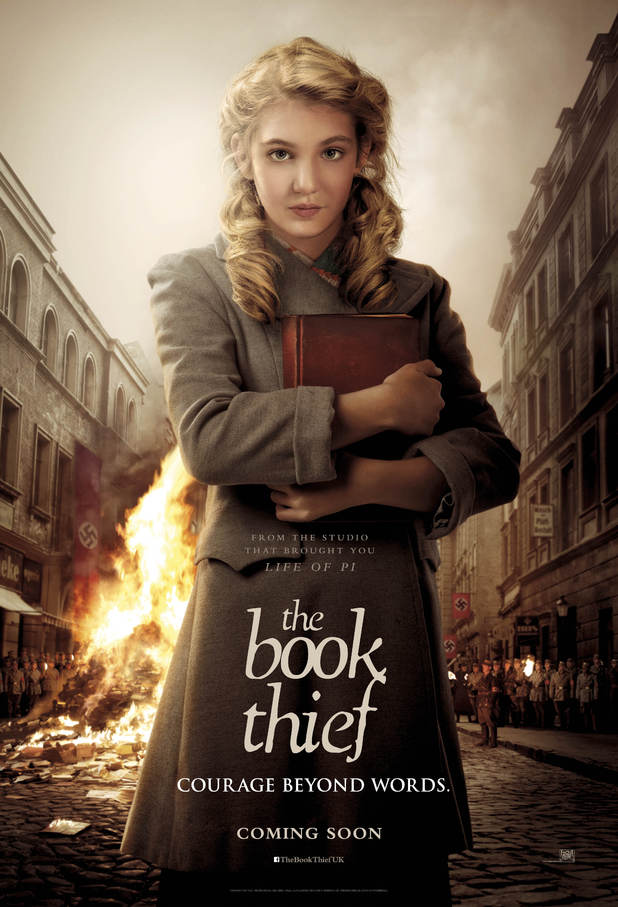
How is the genre introduced?
-Everything is very calm and showing the setting, the time period and the characters, setting it up to be a drama as we get general knowledge of the situation first, then the little boy dies and this creates a rise in the film, making it a drama.
How are characters represented?
-We are introduced to a sinister mysterious character that we can't see that leaves open a lot of questions and makes the audience think.

-She is shown to the left of the frame, and next to her is the window showing how alone she is.
How is the mood/style introduced?
-We can tell that this could be an upsetting film because of the music.
-Everyone on the train looks fed up or ill- people are being forced to be put in situations.

Describe mise en scene?
-At the beginning its very cloudy and dark which is quite unsettling.

-On the train it is dark and all the colours are really dull and boring showing little money and depression.
How is the narrative set up?
-We hear everything from the narrators point of view, and we travel along with him and the audience feel as if they are being taken on a journey and have no control over what's going to happen.
 What order are the inter titles?
-20th century fox
-Fox 2000 Pictures presents- black screen
-A Sunswept Entertainment production- black screen
How is sound used?
-Soft non diegetic music of a piano- sad music.
-Narration over the top of the music of a soothing but still sinister kind of voice.
-More upbeat music created by string instruments to match the movement of the train.
-Ambient diegetic sound of the train on the tracks moving.
-There's no sound when she realises her brother is in danger, then suspense music is played-non diegetic- creating a feeling of uncertainty and panic.
-Diegetic sound of the mother screaming and the whistle of the train are blended together in one.
What camera shots are used and to what effect?
-Long shot of the clouds-makes the audience focus on the narration and puts them in a dream state like mind.

- following a train- been taken on a journey.
Mid shot of the main girl, focusing on her facial expressions and when she turns to her mother and brother we can still see her upset body language.
Camera movement?
-Soaring through the sky smoothly, it's quite unsettling and makes the audience feel like their going on a journey.
-Camera moves around the train showing both sides, and it puts the audience in a perspective that they are looking for something.
-On the train the camera tracks forwards and pans from left to right very slowly as if we are examining the people on the train.
What can you take from this opening and use in
your film?
-At one point there is a transition from the smoke into the train, I would like to use a creative transition like this so that the scenes link into each other nicely and create a smooth effect.


Thursday, 18 September 2014
Analysis of opening two minutes of Juno
How is the genre introduced?
Everything is calm, therefore, we can tell that it's later on going to be a drama as something is going to happen as she's on her way to somewhere.
It's light hearted which suggests it's going to be a comedy.
 How arecharacters represented?
Free, independent - always alone but on a journey
Reoccurring running boys-shows that they have a significance, never see their faces-not that important
How is the mood/style introduced?
focused on one character-their story
creative style- stock motion
Decribe mise en scene?
 There are bright pastel colours in the background and the background and setting is simple and doesn't have detail in it, Juno stands out from the background as she has detail, she's more colourful than the rest of the mise en scene.
Everything that is significant to her is in a brighter colour with detail.
Everything is shown as if it's been drawn as is quite sketchy.
How is the narrative set up?
Following Juno therefore we can tell it' going to be about her story, we can see that the boys who jog in the background are going to be significant as they keep on appearing.
What order are the inter titles?
fox searchlight pictures, again on screen,
Mandate pictures-Mr Mudd production- on screen
A Jason Reitman Film- on screen
Juno is then introduced on the screen
How is sound used?
Diegetic sound of boys running past
Non diegetic music of a song in the background that is at the same level of volume the whole time
 What camera shots are used and to what effect?
long shot of Juno walking- see her journey
Close up of her jeans and shoes-shows personality in detail
Close up of leaves- shows significance it may have in the movie
 Mid shots of her face-looking happy-shows what kind of person she is.
Extreme long shot to show the area she lives in.
Ariel view of the leaves falling on her and Juno looking up-shows the season that they are in and
how she takes notice of it.
Camera movement?
Smooth and stable-showing a journey and day to day life- suits the mood of being calm and appreciating the surroundings.
What can you take from this opening and use in
your film?
 At one point writing appears from the branch as if its been swept by the branch.
Long shot of characters walking to show their journey.
Significance of certain objects to the character.
Tuesday, 16 September 2014
Anaylisis of opening two minutes of The Proposal

The genre is introduced with:
- Non diegetic positive upbeat music, over a long shot of pretty woods, the camera then moves over to a well organised women on an exercise bike reading papers. We can tell that she is automatically single and dedicated to a work style of life.
- Male and female leading different lives
- Both characters dislike each other, like a typical romantic comedy movie
How the characters represented:


- The man wakes up late and we get a overhead view of his bedroom which is messy and un-organised, next we see him running past the taxis, obviously setting the scene of New York. A girl in Starbucks likes him, following the guidelines of a type romantic comedy.
- The boss gets up early and we can see that she is very organised, her apartment is tidy and she has time to set herself up with different activities, such as exercising whilst reading, having time for a shower and then cycling to her work. She is highly work involved.
- The characters hate each other- the man works for the women as she is the boss
- The women is disliked by the office, as the man sends messages to all of the workers saying things such as "it's here" and "the witch is on her broom"
- They challenge stereotypes of gender because the women is in control and the man has no say to any decision that has been made, and he's under her control.
How the mood/style is introduced? - The main characters hate each other and are bound to have a massive argument and fall out with each other, fitting perfectly into the genre of a romantic comedy.
- The characters different life styles are shown, presenting how different of characters they are, which usually means that at some point they will probably end up getting together.
- Upbeat positive music
Mise en scene - When the women is on her exercise bike, we see in the background through the window a city, automatically letting the audience know that she's in New York.
- Whilst the camera is focused on the characters, in the background we can see the taxi's and lots of buildings around, signifying that it's set in New York
- The women's house is really tidy, clean and well organised, her kitchen especially looks posh and expensive showing her wealth and hard work.

- The man's room is messy and look pretty average showing how he works in a job that he doesn't really like and is stuck in a position he would rather not be in at work. It also shows he is un-organised
- The work office is set in a tall building on a high floor, we can tell this from the whole windows as walls, and the fact that the man takes the lift up to the office. The office looks posh and big showing wealth and hard work.
Narrative: - The women needs a reason to stay in the country as she doesn't have a Visa. Therefore it's clear that she will try and marry the man, so that she can stay in the country, resorting in them falling in love.
- Two characters hate each other, contrasting characters (horrible boss, innocent worker)
- Main bad character, that will turn out to be loved by the man
Inter titles: - First on a black screen "Touchstone", "Manderville films" come up

- Next over the action they repeat followed by the main characters, then the name of the film, afterwards the important people involved in the film come up over the action as well.
- The inter titles follow the characters movement at some points as well, for example when the man rushes to the lift, the titles follow across with him in sync with his movement.
Sound: - At the beginning to set the mood non diegetic upbeat music is played. It links the scenes together nicely.
- Then there's diegetic music, such as the popping noise of messages, which keeps the film light hearted and moving fast.
- Also there is the sound of the traffic which enhances the city life.
- The non diegetic music in the office gives of a tense vibe but also gives the impression that the man is on a mission, which helps set the mood between the characters.

Camera shots: - Camera shots used were- long shots, close ups, mid shots, extreme close ups.
- Long shots were used to show the women walking into the office, this hows what effect she has on other people.
- The mid shots were used to show the general character and what situations they were in.

Camera movement: - The general camera movement was smooth and stable, this could represent the mood of the film, also it wouldn't be as acceptable if the camera was fast moving and unstable as you want the audience to fully concentrate on the situations happening on screen.
What I can take from the film and use in my own film: - I would like to use how the inter titles follow the characters
- Location markers
Anaylisis of opening two minutes of Sleepy Hollow

The genre of Sleepy Hollow is introduced with what the audience are lead to
believe as blood dripping on the floor, automatically this connotes genres of
horror and mystery. It makes the audience question what has happened outside of
the shot. Also the creepy non diegetic
music at the beginning sets the theme of horror, and creates suspense.
One of the characters is first introduced by a close up on his hand. The character is writing a letter, the writing on the letter is fancy and the paper is old, so we can tell that the film is set a few decades ago. This character seems mysterious because we only see his hand, which suggests that we shouldn’t know who he is, however we do know that he is. We see another character in the carriage in the middle of a storm which suggests that he is vulnerable and also innocent as he is by himself. We don’t get introduced to the characters properly, we don’t hear them speak or engaging with other people, which creates this whole theme of mystery.
The lighting is dark and there are a lot of shadows around which sets the mood of horror. Tim Burton has used pathetic fallacy to suggest the mood in which he is presenting. The mise en scene is very detailed, for example we can see the letter is on old paper and he is writing with ink, which shows the era and the significance of the letter. The room isn’t shown too much, therefore not giving much away. Outside its very dark and it looks like the characters are in the middle of nowhere, or so we are lead to believe as we can’t see a lot from the low lighting. It’s all very well planned as the audience don’t get to see a lot, which makes them question what going to happen in the movie. This is the narrative being set up, we can see a mystery being formed, and everyone is wondering what’s going to happen next.
There were very few inter titles, and they were presented on a black screen, so that when the first scene came on, the audience could concentrate on the movie, which means that Tim Burton wants the audience to pay close attention to the actions going on in the movie. First we had the “Mandely pictures” and then the production team, whilst Tim Burton followed afterwards. The inner titles were kept short whilst non diegetic music played over the top. The music was creepy and set the mood for the scene, it automatically made the audience feel tense and it added more emphasis to the mood. There were also diegetic sounds such as the horse gallop and the sound of lightening. These sounds are already quite creepy if put in the right place. The horse galloping was sinister and created suspense, and the lightening added to the suspense and really added to the mood of horror.
Camera shots can really affect the way a movie looks, there were many camera shots and they were all used to their advantage. There were close up of the candle wax dropping on the floor, which gave a lot of detail, but was also used so that you couldn’t see what was going on around the camera, which also lead to mystery. There was a long shot of the horse and carriage, so that we could see the environment that it was in and what kind of era the movie was set in. A mid shot was used to show the character in the carriage, this gave us an idea of the kind of person he was going to be representing.
The camera movement on the whole was smooth and stable, so that it was easy to focus on what was in the shot, and made it so that you were watching from a third persons view. When creating the beginning of a movie, I would like to use the close ups, for detail and also so it leads to mystery; and non diegetic sound so that it sets the mood for the scene.
One of the characters is first introduced by a close up on his hand. The character is writing a letter, the writing on the letter is fancy and the paper is old, so we can tell that the film is set a few decades ago. This character seems mysterious because we only see his hand, which suggests that we shouldn’t know who he is, however we do know that he is. We see another character in the carriage in the middle of a storm which suggests that he is vulnerable and also innocent as he is by himself. We don’t get introduced to the characters properly, we don’t hear them speak or engaging with other people, which creates this whole theme of mystery.
The lighting is dark and there are a lot of shadows around which sets the mood of horror. Tim Burton has used pathetic fallacy to suggest the mood in which he is presenting. The mise en scene is very detailed, for example we can see the letter is on old paper and he is writing with ink, which shows the era and the significance of the letter. The room isn’t shown too much, therefore not giving much away. Outside its very dark and it looks like the characters are in the middle of nowhere, or so we are lead to believe as we can’t see a lot from the low lighting. It’s all very well planned as the audience don’t get to see a lot, which makes them question what going to happen in the movie. This is the narrative being set up, we can see a mystery being formed, and everyone is wondering what’s going to happen next.
There were very few inter titles, and they were presented on a black screen, so that when the first scene came on, the audience could concentrate on the movie, which means that Tim Burton wants the audience to pay close attention to the actions going on in the movie. First we had the “Mandely pictures” and then the production team, whilst Tim Burton followed afterwards. The inner titles were kept short whilst non diegetic music played over the top. The music was creepy and set the mood for the scene, it automatically made the audience feel tense and it added more emphasis to the mood. There were also diegetic sounds such as the horse gallop and the sound of lightening. These sounds are already quite creepy if put in the right place. The horse galloping was sinister and created suspense, and the lightening added to the suspense and really added to the mood of horror.
Camera shots can really affect the way a movie looks, there were many camera shots and they were all used to their advantage. There were close up of the candle wax dropping on the floor, which gave a lot of detail, but was also used so that you couldn’t see what was going on around the camera, which also lead to mystery. There was a long shot of the horse and carriage, so that we could see the environment that it was in and what kind of era the movie was set in. A mid shot was used to show the character in the carriage, this gave us an idea of the kind of person he was going to be representing.
The camera movement on the whole was smooth and stable, so that it was easy to focus on what was in the shot, and made it so that you were watching from a third persons view. When creating the beginning of a movie, I would like to use the close ups, for detail and also so it leads to mystery; and non diegetic sound so that it sets the mood for the scene.
Monday, 15 September 2014
Analysing peoples blogs

http://haydonmedia.co.uk/g321-moderation-2013/

http://issuu.com/haydonmedia/docs/finalone____/1?e=7172892/2539165

http://6075chrispearsong321.blogspot.co.uk/
Subscribe to:
Comments (Atom)